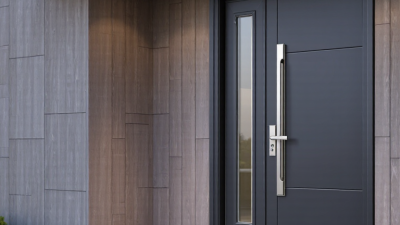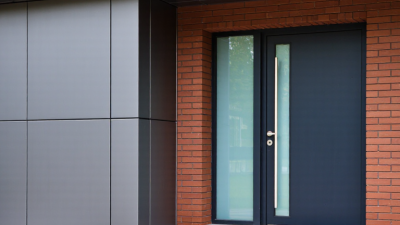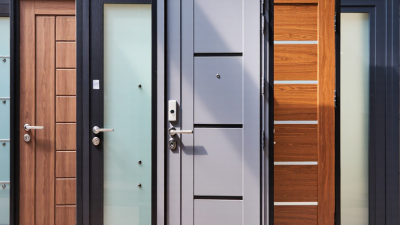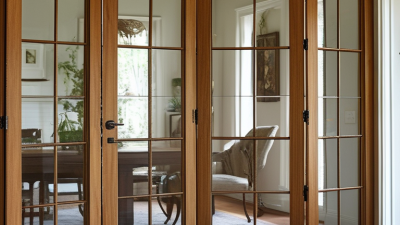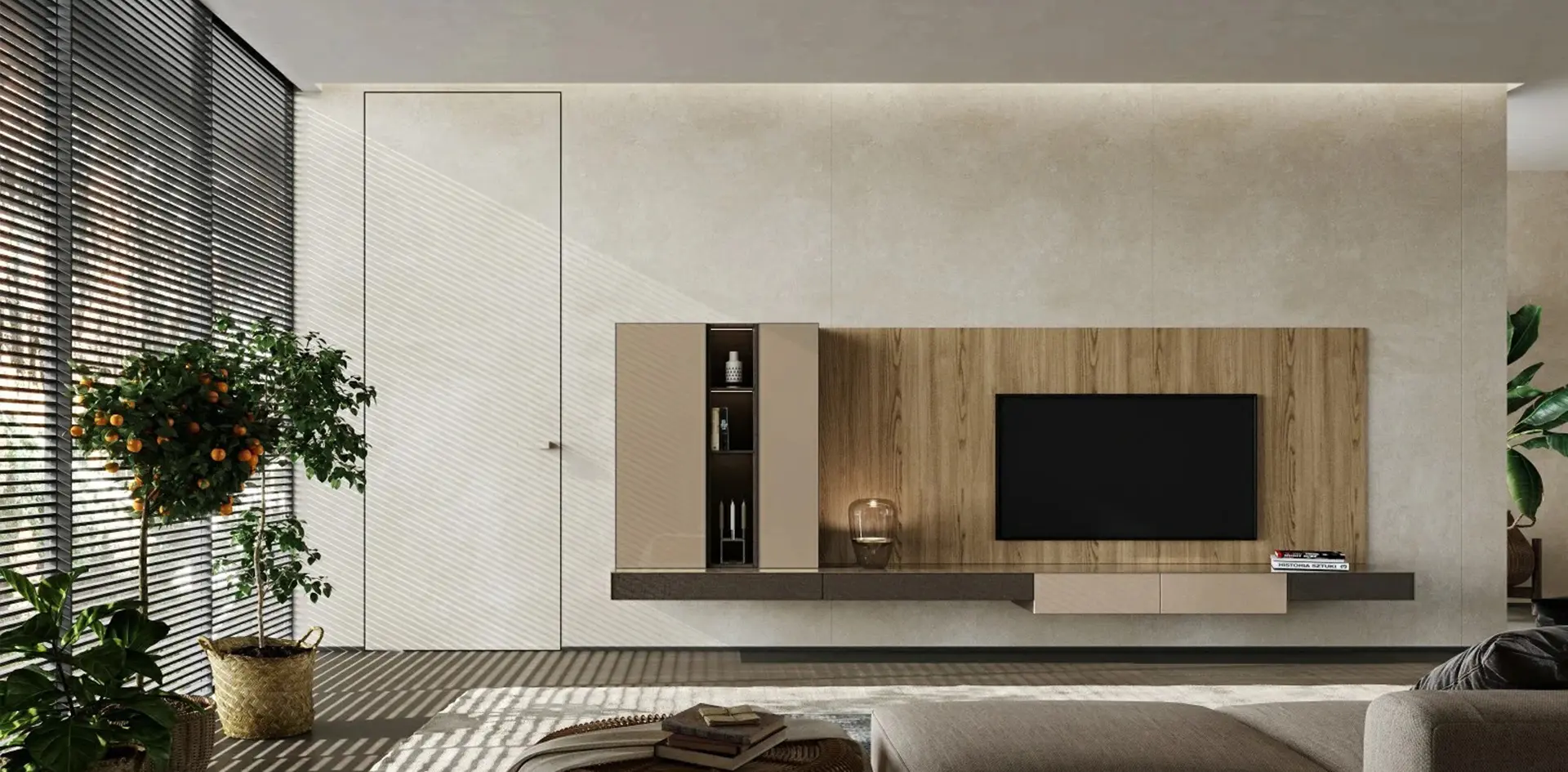


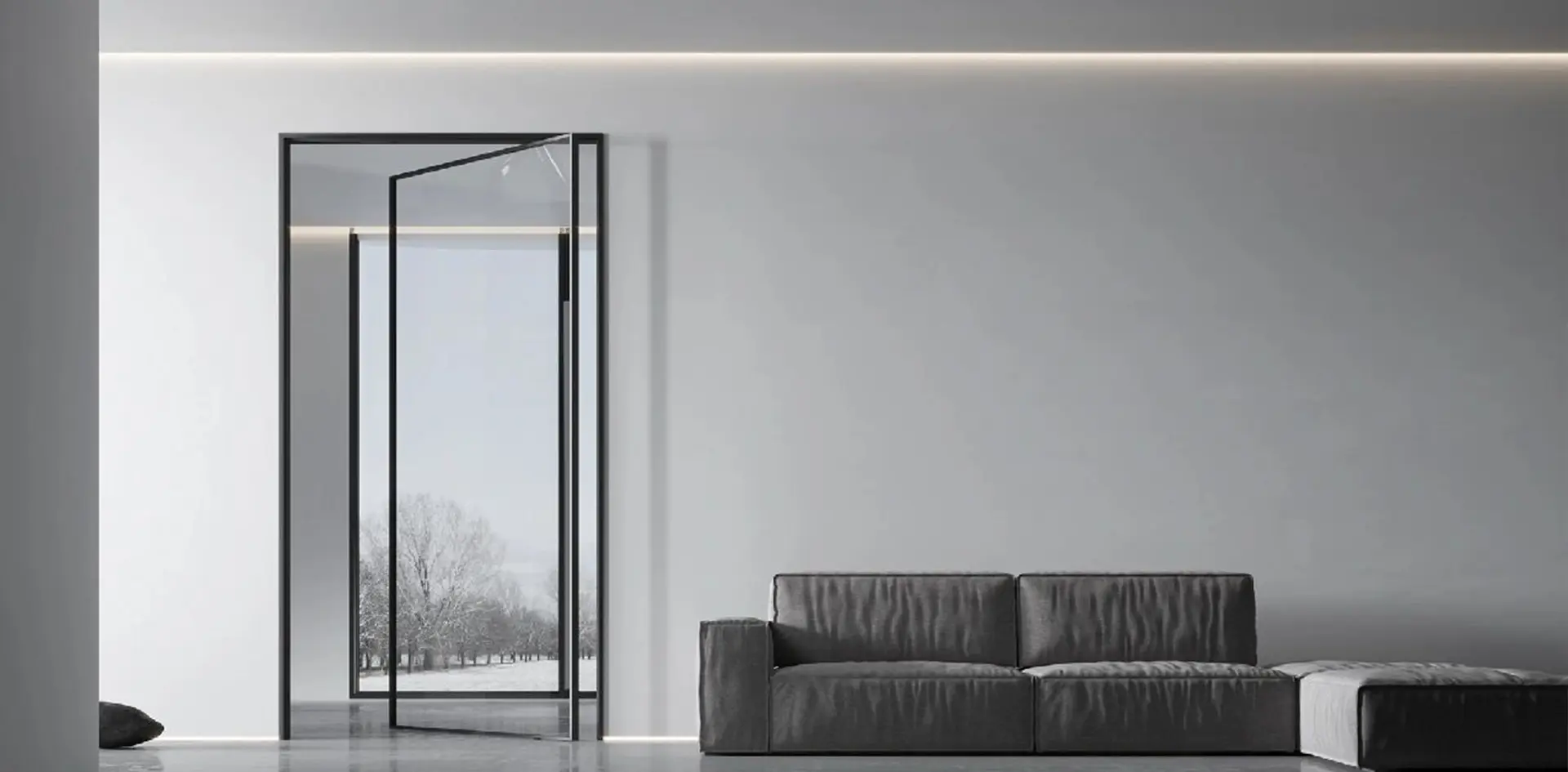


China has become a major sourcing destination for Modern Front Door products. Its manufacturers now serve residential, commercial, and hospitality projects across global markets. Their portfolios include aluminum pivot doors, insulated steel systems, timber-look entrances, and smart access solutions.
The strongest suppliers do more than display attractive finishes. They explain thermal performance, water drainage, hardware durability, glass specifications, and installation requirements. This distinction matters. A beautiful door can still fail beside a poorly prepared threshold. Building scientist Dr. Joseph Lstiburek often emphasizes, “Water is the enemy.” His warning is especially relevant to exterior entrances, where rain, wind, and repeated opening can expose weak design quickly.
This guide examines leading Chinese Modern Front Door manufacturers for international buyers. It considers factory capability, customization, testing documentation, export experience, and after-sales support. Readers will also find practical questions about dimensions, opening direction, coating quality, packaging, and replacement parts. These details may appear ordinary. They often decide whether a project runs smoothly.
Not every impressive showroom reflects equal manufacturing discipline. Some suppliers communicate clearly, while others leave technical gaps. That uncertainty deserves attention. Product photos cannot confirm hinge strength or frame accuracy. Samples help, but they do not replace factory audits and verified specifications.
The goal is not to promote one universal style. It is to help buyers compare credible manufacturers with greater confidence. A dependable Modern Front Door should protect the building, support its visual identity, and perform consistently after installation. That balance is difficult. It is also the standard worth pursuing.
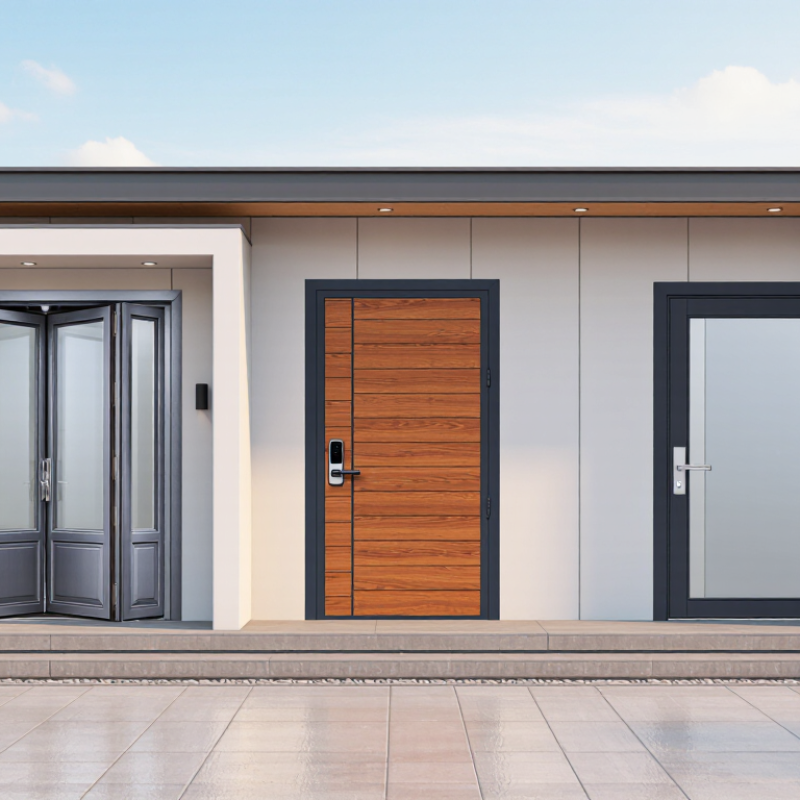
China’s modern front door industry has grown from basic export production into a specialized manufacturing sector. Factories now combine insulated cores, aluminum alloys, steel frames, smart locks, and weather-resistant coatings. Many production centers support large-scale orders for residential, commercial, and hospitality projects.
The market position is strengthened by flexible customization and competitive manufacturing capacity. Buyers can request different panel textures, opening directions, thermal ratings, glazing layouts, and hardware configurations. Experienced manufacturers usually manage cutting, welding, surface finishing, assembly, and inspection under one production system. This can reduce coordination problems and improve delivery control. It also helps suppliers respond to different climate requirements, from humid coastal areas to cold northern regions.
Quality is still uneven. This matters. A polished sample may not represent every production batch. Reliable buyers should review material specifications, test reports, factory records, packaging methods, and installation guidance. In my experience, small details often affect long-term performance, including hinge alignment, drainage design, seal compression, and coating thickness. Some manufacturers remain highly capable, yet their technical communication can be incomplete. Clear drawings and written inspection standards are therefore essential.
China’s manufacturers hold a strong position in global sourcing, but price alone should not define the partnership. Stable quality, traceable production, responsive engineering, and compliance with destination-market requirements increasingly influence purchasing decisions.
Modern front doors made in China increasingly combine thermal efficiency, security, and precise customization. UNEP’s 2024 Global Status Report says buildings consumed 32% of global energy in 2023. Door performance deserves attention.
Many manufacturers use thermally broken aluminum frames, insulated cores, and multi-layer weather seals. These details reduce heat transfer around the opening. Low-emissivity glass can also improve comfort near glazed entrance panels. However, specifications must be verified through test reports, not attractive catalog language.
A well-made door should show measured U-values, air leakage results, water resistance, and wind-load performance. Testing should follow recognized standards, such as EN 14351-1 or ASTM methods, depending on the destination market. Multi-point locks, reinforced hinges, and laminated safety glass add practical protection. Good powder coating also helps resist coastal humidity and strong sunlight.
Small details matter.
Global buyers should inspect corner joints, gasket compression, drainage holes, and threshold design. These areas often reveal production discipline. The U.S. Department of Energy recommends weatherstripping to limit drafts, but installation quality remains critical. Even an excellent door can fail when the frame is poorly aligned. That is an uncomfortable point, yet it deserves more attention during factory audits. Custom finishes, oversized panels, and smart-access preparation are useful features, but they should never replace documented structural and thermal performance.
Evaluating China’s top modern front door manufacturers requires more than viewing polished catalogs.
Visit the factory, or request a live video inspection. Check cutting equipment, welding areas, coating rooms, and finished-door storage. Dust on the coating line can reveal weak process control. So can uneven corner joints.
Ask for a complete sample, not only a small color panel.
Inspect frame alignment, hinge movement, lock preparation, weather seals, and threshold drainage. Measure the door thickness and core structure.
Request documented tests for air leakage, water resistance, wind pressure, fire performance, and thermal insulation when relevant. These reports should match the exact model, not a similar product. Confirm which laboratory issued them and whether they suit your market.
Reliable manufacturers explain material grades, tolerances, packaging, and replacement procedures clearly.
They provide production photos, batch records, and realistic lead times. A confident sales promise is not enough. Ask how damaged panels are handled after delivery. Also review sample approval and inspection checkpoints in writing.
I once focused too heavily on surface finish and overlooked hinge adjustment access. That mistake created extra installation work.
A strong supplier should welcome difficult questions, admit limitations, and improve details before mass production. Communication matters too. Slow replies during sampling may become costly silence later.
China Top Modern Front Door Manufacturers for Global Buyers
Manufacturing Standards, Customization, and Quality Control
Reliable front door manufacturing begins with documented standards, not attractive showroom photographs. Experienced factories verify material grades, weld quality, surface treatment, and dimensional accuracy before production starts. Buyers should request drawings, inspection records, and applicable test reports for the destination market. Requirements may include thermal performance, water resistance, air leakage, fire ratings, and security hardware compatibility.
Customization works best when technical details are fixed early. Manufacturers can adjust panel sizes, glazing layouts, colors, finishes, hinges, locks, and opening directions. A signed sample helps prevent costly misunderstandings. It should show the frame joint, edge sealing, coating texture, and hardware position. Tolerances matter. A beautiful door may still fail installation if the frame is slightly oversized.
Quality control should continue throughout production. Inspectors can check incoming aluminum, steel, wood, glass, and accessories before assembly. During production, they should measure diagonals, weld points, paint thickness, and drainage paths. Final checks should include repeated opening tests, packaging strength, labeling, and moisture protection. One recurring weakness is relying too heavily on final inspection. Problems often begin with unclear drawings. Even careful suppliers can miss a small revision. For this reason, buyers should approve every change in writing and keep inspection evidence with the purchase records.
| Evaluation Dimension | Typical Buyer Requirement | Relevant Standard or Technical Reference | Recommended Documentation or Inspection Method |
|---|---|---|---|
| Primary Door Materials | Aluminum, galvanized or stainless steel, fiberglass, engineered timber, or combinations of these materials. | Material selection should reflect local exposure, security needs, thermal performance, and maintenance expectations. | Review material specifications, alloy or steel grade, coating system, moisture resistance, and representative production samples. |
| Common Door Configurations | Single-leaf, double-leaf, side-panel, transom, pivot, hinged, and glazed entrance systems. | Configuration should be engineered for the opening size, hardware load, weather exposure, and required operating cycle. | Approve shop drawings showing handing, frame sections, clear opening, hinge positions, drainage, glazing, and hardware locations. |
| Custom Dimensions | Made-to-order width, height, frame depth, threshold height, sidelights, and transom dimensions. | Final dimensions must be based on verified site measurements rather than nominal door sizes. | Use an approved measurement sheet with wall thickness, opening squareness, diagonals, sill condition, and installation tolerances. |
| Thermal Insulation | Insulated door leaves, thermally improved frames, sealed cores, and low-conductivity spacers where applicable. | EN 14351-1 covers performance characteristics for external pedestrian doorsets; U-factor or U-value reporting should state the calculation or test basis. | Request thermal calculations or test reports identifying the complete doorset, including leaf, frame, glazing, and threshold. |
| Air Permeability | Controlled air leakage through properly sealed leaves, frames, thresholds, and gaskets. | EN 1026 testing and EN 12207 classification are commonly used in European projects. ASTM E283 is used for air leakage testing in North American projects. | Check the test pressure, specimen dimensions, leakage result, classification, and whether the report covers the complete doorset. |
| Water Tightness | Continuous perimeter seals, protected drainage paths, correctly designed thresholds, and sealed glazing interfaces. | EN 1027 and EN 12208 are commonly used for water-tightness testing in Europe. ASTM E331 is used for water penetration testing in North America. | Review water-test pressure, test duration, leakage criteria, drainage design, and installation instructions. |
| Wind Load Resistance | Door leaf, frame, hinges, locks, and fixings designed for the project wind-load zone. | EN 12211 and EN 12210 are commonly used for wind-load testing and classification. ASTM E330/E330M is used for structural performance testing. | Provide project design pressure, deflection limits, test pressure, permanent deformation results, and anchoring details. |
| Weather Sealing | Replaceable EPDM, silicone, or equivalent compression gaskets at the frame, leaf, glazing, and threshold. | Gasket compatibility should be checked against UV exposure, temperature range, cleaning chemicals, and the selected frame finish. | Inspect gasket continuity, corner joints, compression, replaceability, drainage holes, and threshold sealing during pre-shipment inspection. |
| Security Hardware | Multipoint locks, reinforced strike areas, security cylinders, concealed or heavy-duty hinges, and laminated safety glazing where required. | EN 1627–EN 1630 are used for burglar-resistance classification of doorsets. Hardware selection must match the intended security class and door mass. | Verify lock points, cylinder protection, hinge-side security, hardware load rating, glazing composition, and keying requirements. |
| Glazing Options | Clear, tinted, frosted, low-emissivity, laminated, tempered, or insulated glass units. | EN 12150 applies to thermally toughened glass; EN 14449 applies to laminated glass; EN 1279 covers insulating glass units in applicable markets. | Confirm glass thickness, safety classification, spacer type, gas fill if specified, edge deletion, visible-light properties, and markings. |
| Surface Finishing | Powder coating, anodizing, fluoropolymer coating, wood veneer, painted timber, or decorative laminate according to material. | For aluminum architectural finishes, AAMA 2603, AAMA 2604, and AAMA 2605 represent progressively higher coating-performance requirements. | Check color reference, gloss level, coating thickness, adhesion, curing records, surface uniformity, edge coverage, and packaging protection. |
| Corrosion Protection | Pre-treatment and compatible coating systems for coastal, humid, industrial, or inland environments. | ISO 9227 provides salt-spray test methods; ISO 12944 provides a framework for corrosion-protection systems and corrosivity categories. | Request coating-system details, substrate pre-treatment, salt-spray results where relevant, and recommendations for coastal installation. |
| Dimensional Tolerance | Stable frame geometry, accurate diagonals, consistent reveals, and smooth operation after hardware installation. | Tolerances should be defined on the approved shop drawing and agreed before production because requirements vary by system and installation method. | Measure overall width, height, diagonals, frame depth, leaf gaps, threshold level, and hardware alignment using calibrated tools. |
| Factory Quality Control | Incoming-material inspection, first-article approval, in-process checks, final assembly inspection, and packing verification. | A documented quality plan should identify inspection points, acceptance criteria, responsible personnel, and corrective-action procedures. | Request inspection checklists, nonconformity records, corrective-action reports, serial or batch traceability, and final inspection photographs. |
| Operational Testing | Smooth opening and closing, correct latch engagement, stable seals, and no abnormal rubbing or hardware movement. | Cycle-testing requirements depend on the project specification, door weight, hardware system, and applicable regional standard. | Operate each sampled doorset repeatedly, check lock engagement, measure operating force where required, and record defects before packing. |
| Packaging for Export | Corner protection, moisture-resistant wrapping, impact protection, labeled components, and reinforced crates or pallets. | Packaging should account for container handling, humidity, stacking, vibration, and the final installation sequence. | Confirm packing list, crate dimensions, gross weight, lifting points, moisture protection, product labels, spare parts, and installation documents. |
| Documentation Package | Approved drawings, bill of materials, care instructions, installation guide, warranty terms, and test records where specified. | Documents should identify the exact configuration, revision number, materials, finishes, hardware, glazing, and applicable performance claims. | Match documents against the physical product and retain approved revisions for purchasing, customs, installation, and future replacement parts. |
| Sustainable Material Criteria | Recyclable metals, responsibly sourced timber where applicable, durable finishes, replaceable gaskets, and repairable hardware. | Environmental claims should be supported by recognized declarations or chain-of-custody documentation rather than unsupported marketing statements. | Request environmental product declarations, timber certification where applicable, recycled-content evidence, and product-maintenance information. |
China Top Modern Front Door Manufacturers for Global Buyers
Global buying starts with specifications, not attractive photos. Define door size, opening direction, core material, glazing, hardware, fire rating, and finish durability. Ask suppliers for recent test reports, factory quality procedures, and production photographs. A sample should include its frame, seals, hinges, lock preparation, and packaging. Otherwise, comparison becomes unreliable.
Shipping deserves equal attention. UNCTAD’s Review of Maritime Transport reports that ships carry over 80% of world trade by volume. That makes moisture protection and container loading practical priorities. Use clear Incoterms 2020 terms, confirm the HS code with a customs professional, and calculate landed cost. Include duty, port charges, inland delivery, insurance, inspection, and possible storage fees. The World Bank’s 2023 Logistics Performance Index covered 139 economies, showing why destination-country logistics can change supplier decisions.
Check production capacity through references, factory audits, and independent pre-shipment inspection. Request carton dimensions, gross weights, pallet plans, and replacement-part policies before payment. Test doors for operation, water resistance, air leakage, thermal performance, and repeated opening cycles where relevant. Standards differ between markets, so one certificate may not prove full compliance. That is easy to overlook.
A low quotation can hide weaker packaging or inconsistent tolerances. I would compare three landed-cost scenarios, not one. Some suppliers communicate well before ordering, then respond slowly after production begins. Treat that as a warning. Keep approval drawings, color samples, inspection criteria, and delivery milestones in one signed specification. Good selection is less glamorous, but more measurable.
Recommended procurement weighting for global buyers evaluating manufacturers, importing requirements, and supplier reliability.
Quality and product compliance should receive the highest attention, followed by customization capability, export experience, delivery reliability, and commercial competitiveness. Buyers should validate these criteria through samples, technical documents, factory audits, and pre-shipment inspections.